
The useful detail is in the repository
The product description may be in Confluence, while the current behavior or exception is already documented in a README or another Markdown file.
Answers from repository documentation
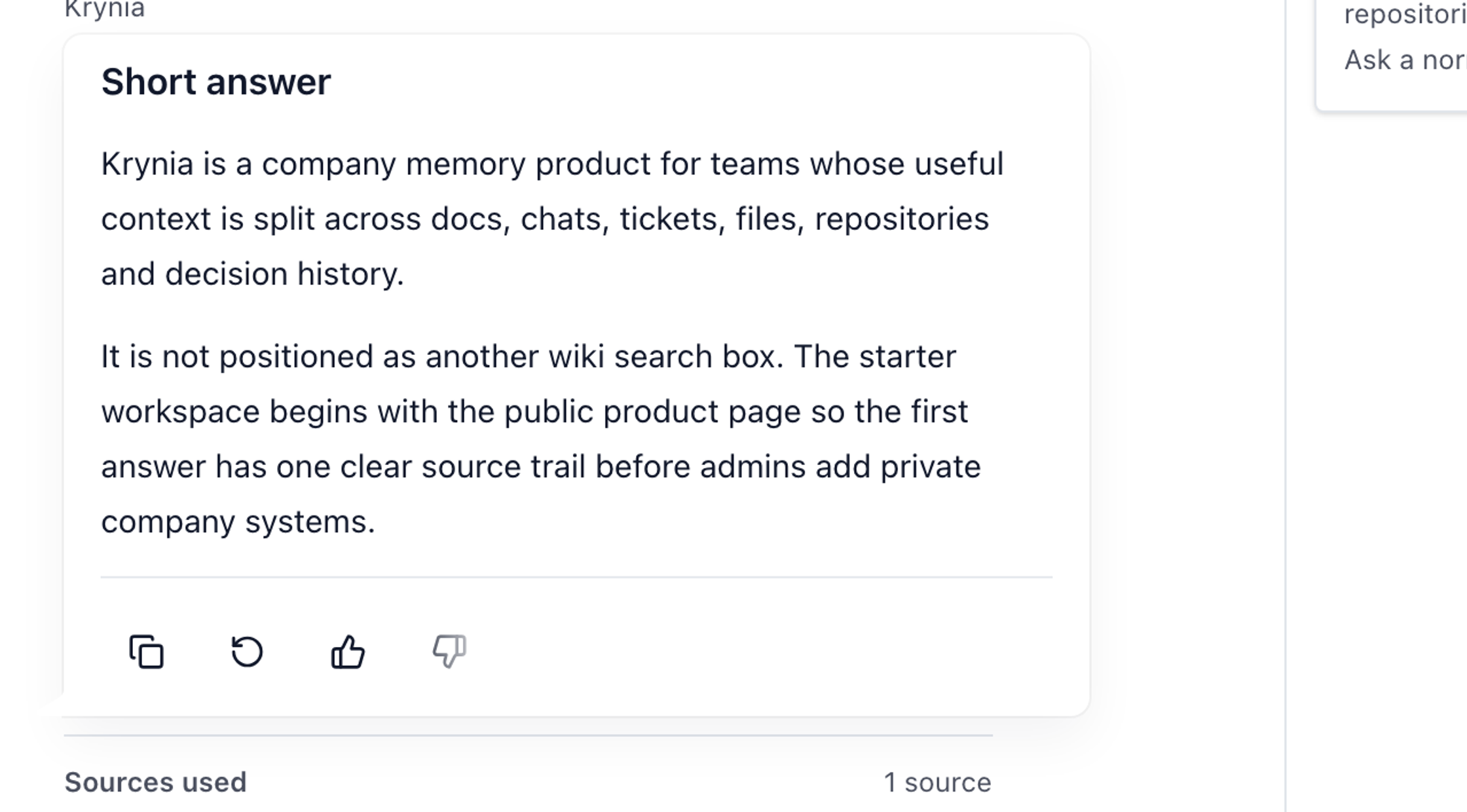
The useful detail may be in a repository while the page in Confluence is already out of date. Krynia indexes the material you add, answers questions about it and links back to the source.
The problem
A wiki search can return a long page without the detail you need. The current explanation may be in a repository, while the page everyone knows has not been updated.
The product description may be in Confluence, while the current behavior or exception is already documented in a README or another Markdown file.
The familiar page stays the first place people search even after the useful explanation has been updated somewhere else.
Even the right long document still has to be read. What you need is a short result and a source link you can check.
Chat-first company memory
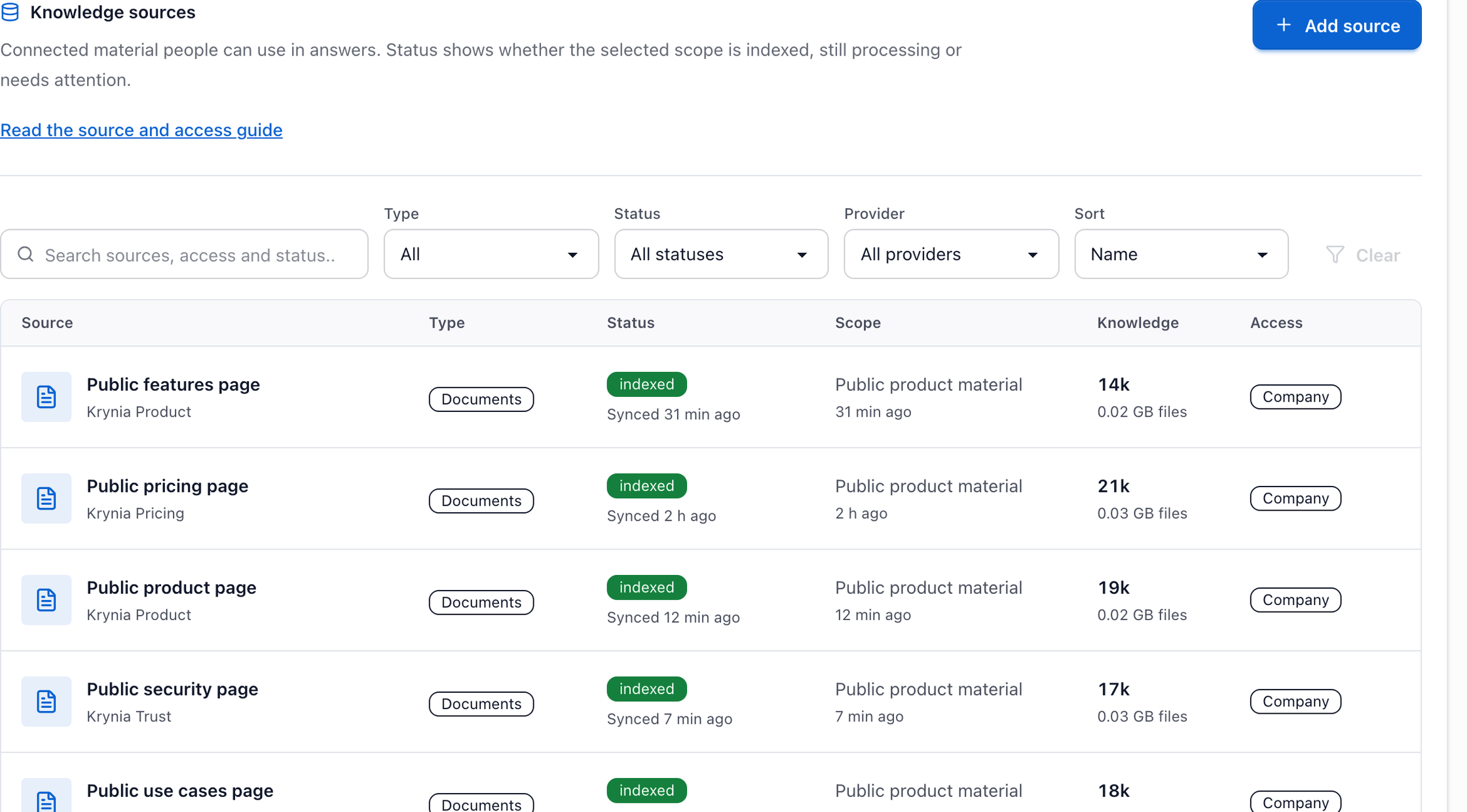
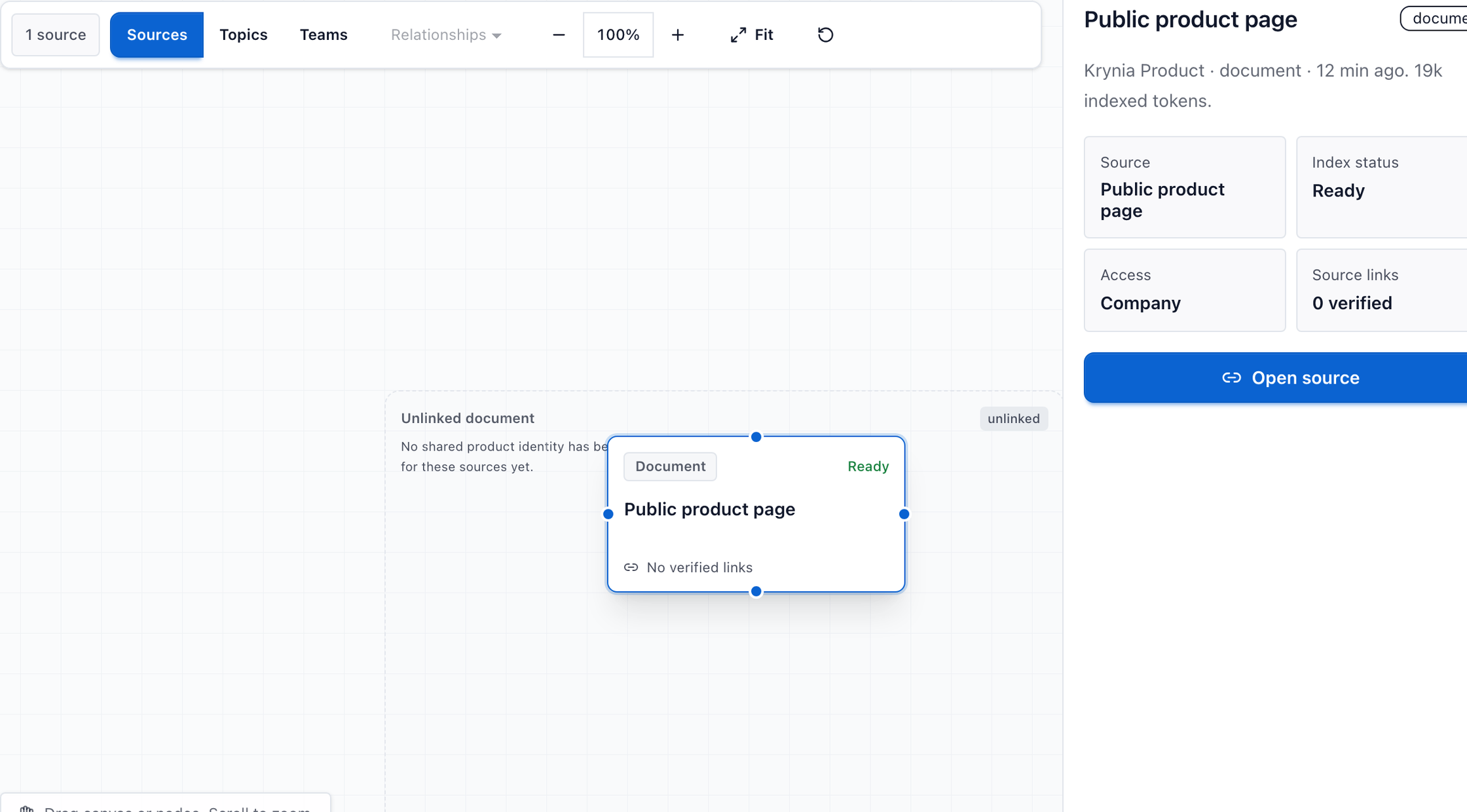
Krynia keeps chat simple for the team while admins can review the material used, the relationship map, the connected sources and monthly knowledge usage behind every answer.
Source summaries keep answers concise without exposing raw internal documents.
Admins can review sources and graph links before trusting or correcting an answer.
Pricing stays tied to retained indexed knowledge, not seats.
Use cases
Product, support, engineering and onboarding teams can ask normal questions, inspect the cited passage and decide whether the answer is safe to use.
Product and support
"What is this product and where is the source?"
Short answer with citations to docs, repositories and decisions.
Engineering
"What depends on this service, package or feature?"
Evidence from repositories, tickets, docs and graph links.
People and team leads
"What should a new teammate read first?"
A scoped reading path based on real company sources.
Founders and managers
"When did we decide this and why?"
Timeline-style answer grounded in PRs, issues, docs and chats.
Workspace admins
"What are people searching for and what is missing?"
Topic groups, failed searches, source gaps and traceable citations.
Everyone
"What context do I need before this discussion?"
KB-first briefing now; calendar-aware preparation can follow later.
Pricing
Krynia bills the knowledge still kept at billing close. Regular sync, storage, citations and normal chat are already part of the base product.
Meter
€0.47
per 1M indexed tokens
Minimum
€47.00
product plus 5M indexed tokens
Included
5M
about 7.7k A4 pages
Why the minimum is EUR 47
The monthly base includes product access, sync, citations and the first 5M indexed tokens. Overage starts only after that included volume.
No seat-based tax for quiet users.
Deleted or stale chunks removed before billing close do not count.